#Monument
Rajamäki Flak Tower
Rajamäki Flak Towers were part of Finland’s air defence during the Second World War. Built to protect vital industrial production, it formed a local network against possible air attacks.
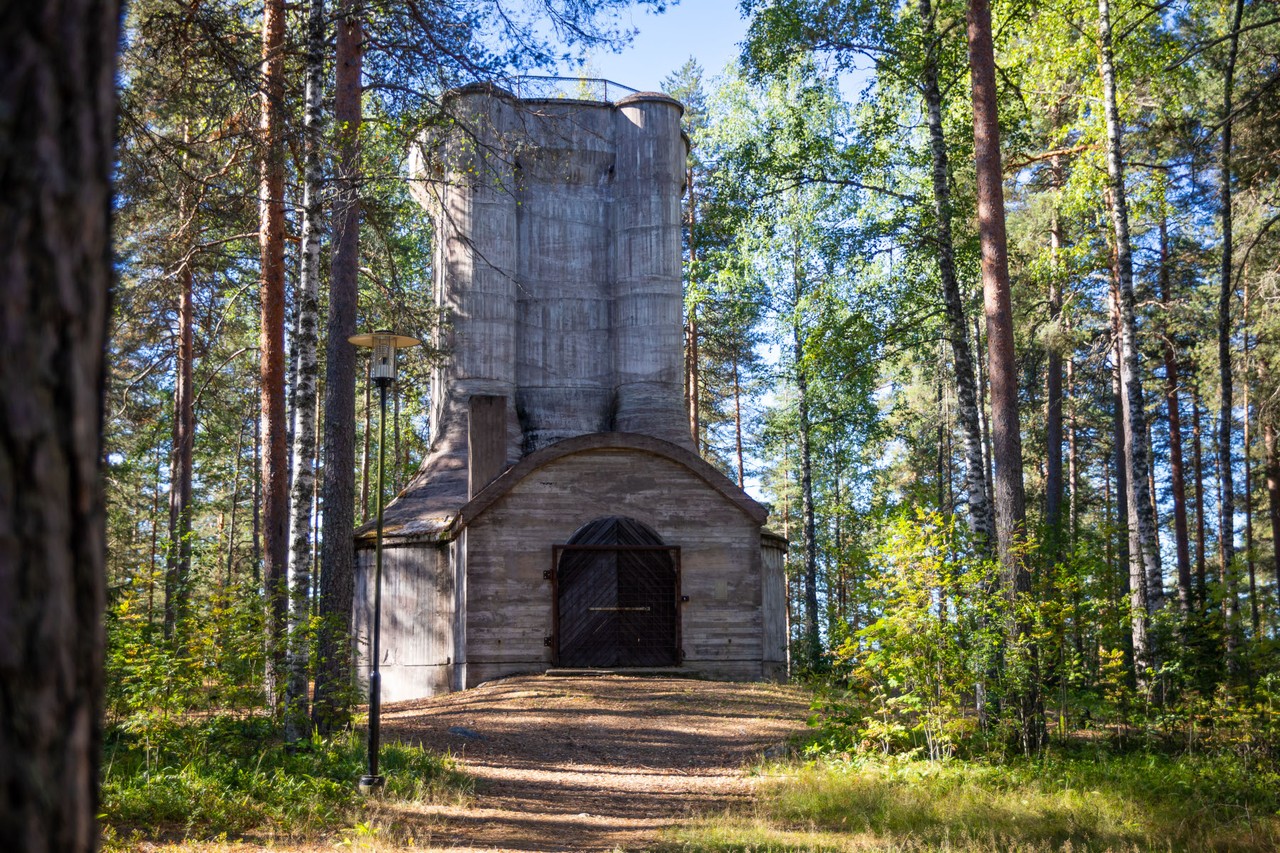
During the Second World War era, Rajamäki was much more than a quiet industrial village in southern Finland — it was part of the nation’s wartime lifeline. The state-owned distillery in Rajamäki was repurposed during the Winter War to produce incendiary “burn bottles,” later known worldwide as Molotov cocktails. These were improvised antitank weapons named by the Finns in a darkly ironic reference to Soviet foreign minister Vyacheslav Molotov during the Soviet invasion of Finland in 1939–40. The Rajamäki factory produced half a million of these bottles to support Finland’s defence against invasion.
To protect this vital manufacturing centre and the surrounding community from potential air raids, two reinforced concrete flak towers were constructed during the 1940s. Each tower was designed as a platform for 40mm Bofors anti-aircraft guns — and as an observation post high above the treetops. These structures formed part of local air defence efforts that mirrored similar installations in other theatres of the war.
In the decades since the war, the towers stood as stark reminders of a turbulent past. Their rugged concrete forms, now overgrown and weathered, bear silent witness to a time when ordinary industrial communities were pulled into global conflict. Today, they are recognised as nationally significant cultural heritage sites within the historic industrial landscape of Rajamäki, close to the village’s landmarks such as the industrial heritage site of Rajamäki’s oldyeast factory, the Factory and Alcohol museum Ryyppi, and Rajamäki church.
Efforts are now underway to preserve and reinterpret this heritage for future generations. The towers are being restored in phases to prepare for becoming accessible to the public. A major new initiative — “Rajamäki Flak Towers Digital Experience” — is also in development, supported in part by EU and local funding. This project aims to combine onsite interpretation with immersive virtual content, digital storytelling and interactive elements that bring the wartime history of Rajamäki to life. Open to visitors from summer 2027, the experience will offer both physical and digital ways to explore how these remarkable structures fit into Finland’s past and the everyday lives of people who lived through the war.
Together, the restored towers and accompanying digital content will help visitors — local and international alike — connect with a unique intersection of industrial heritage, wartime resilience and community memory.
Rajamäki Flak Towers, Nurmijärvi, Tapiontie, 05200
visit@nurmijarvi.fi / Facebook: farajamaentykkitornit / Instagram: rajamaen_tykkitornit