#Story
Limoges train station under German rule: occupation, resistance, and repression
With the Nazi invasion of the free zone in November 1942, Limoges train station was occupied by German troops. A strategic hub for the Resistance-Fer (Iron or Railway Resistance), it became a true theater of operations until 1944.
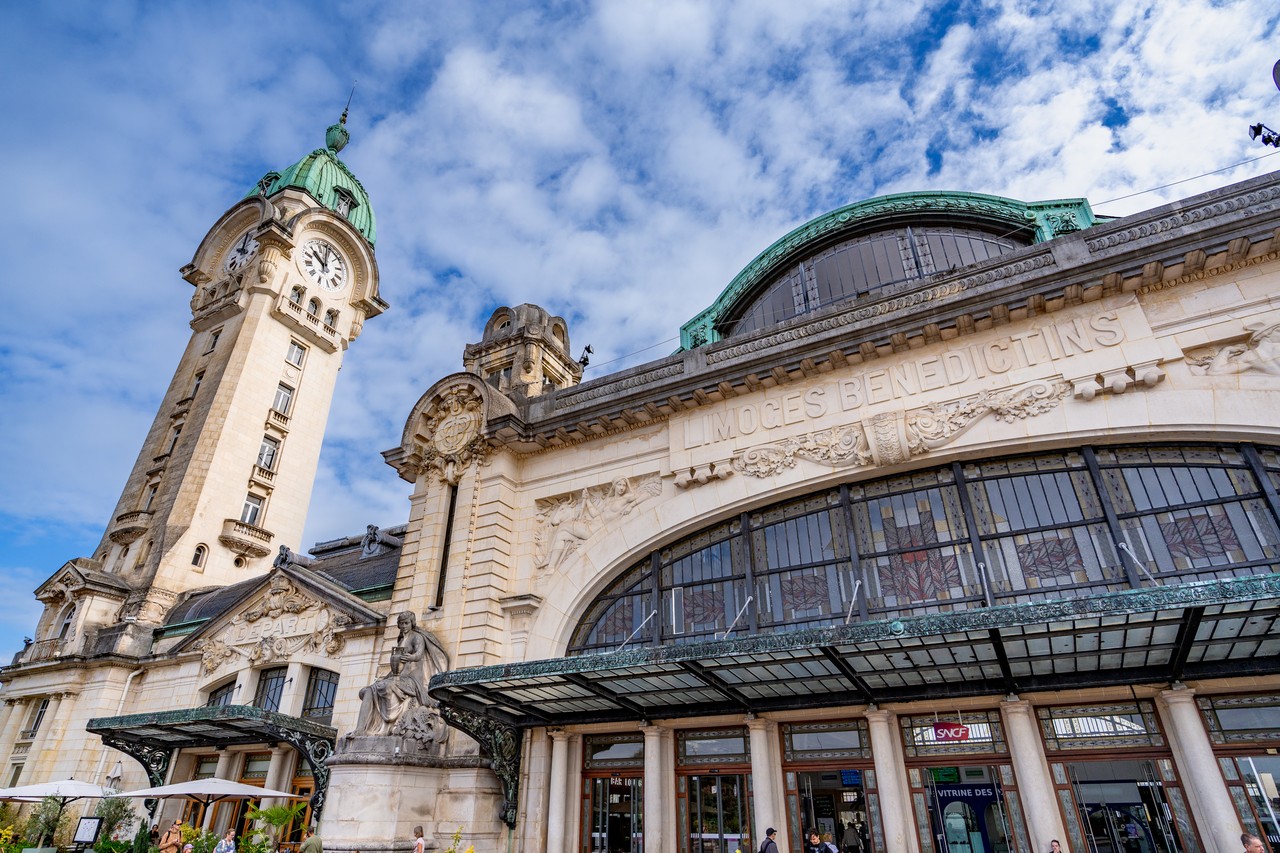
German railway workers, known as "Banofs" (from the German word "Bahnhof", meaning train station), were sent to Limoges under the command of the Transport-Kommandantur. Priority was given to German convoys transporting troops, equipment, and prisoners from nearby internment camps such as Nexon or Saint-Germain-les-Belles. Prisoners were brought onto the tracks through a gate still visible today, then deported via Drancy to various concentration and extermination camps.
In the basement of the station, beneath the tracks, the Wehrmacht walled off part of an old road tunnel to create an air-raid shelter. The marking at the entrance, "Réservé à la Wehrmacht" (Reserved for the Wehrmacht), is still visible today. The station’s signage was completed in German. Each evening, the curfew emptied the building and platforms. Access to the tracks was strictly forbidden to anyone not authorized by the SNCF (French National Railway Company).
However, due to its size, the station was difficult for the Germans to control. It served as a strategic base for a significant group within the Resistance-Fer, active since 1941 under the leadership of Paul Vives-Caillat. Until 1943, this unorganized individual resistance carried out sabotage requiring minimal equipment: draining oil from axle bearings and introducing sulfuric acid into axle boxes. Weapons were hidden in the station’s dome. André Lafarge, Henri Lagrange, and their comrades disrupted German communications. Thanks to the intelligence they provided, RAF bombers destroyed the Gnome et Rhône factory near the Puy-Imbert marshalling yard on the night of 9 to 10 February 1944.
To counter the Resistance, Gestapo (German secret state police) repression intensified in 1944, as commemorated by a plaque in the station’s hall honoring SNCF agents who disappeared during the war. Bullet marks and two graffiti on the station walls recall that on 10 August 1944, a general strike by railway workers paralyzed rail traffic, and on 19 August, the station was taken over by the Resistance-Fer until the city’s liberation on 21 August 1944.