#Story
Hôtel de la Paix: negotiations for the liberation of Limoges, 21 August 1944
On 21 August 1944, Limoges was liberated by the Resistance, organized under the Forces Françaises de l'Intérieur (FFI). The encirclement of the city forced German authorities to negotiate and surrender unconditionally.
The liberation came three months after the Allied landings in Normandy on 6 June 1944. In the meantime, the region had endured the hangings in Tulle on 9 June 1944, and the massacre at Oradour-sur-Glane on 10 June 1944. This long-awaited moment for the people of Limoges and Haute-Vienne was the result of a prolonged Resistance struggle—from the early actions of figures like Georges Guingouin in the summer of 1940 to the Battle of Mont Gargan in July 1944.
On 8 August 1944, the departmental leaders of various Resistance movements decided to encircle Limoges to secure its liberation. Their goal was to pressure the German garrison, commanded by General Gleiniger, into surrendering and avoid a frontal assault that could cause civilian casualties.
General Gleiniger refused to surrender to the communist resistant Georges Guingouin, who had been the departmental leader of the FFI since 3 August 1944, dismissing him as a "terrorist." A neutral negotiator was then appointed: Jean d’Albis, grandson of Théodore Haviland and a correspondent for the Swiss consulate. Involved in the Resistance, d’Albis produced false papers for refugees.
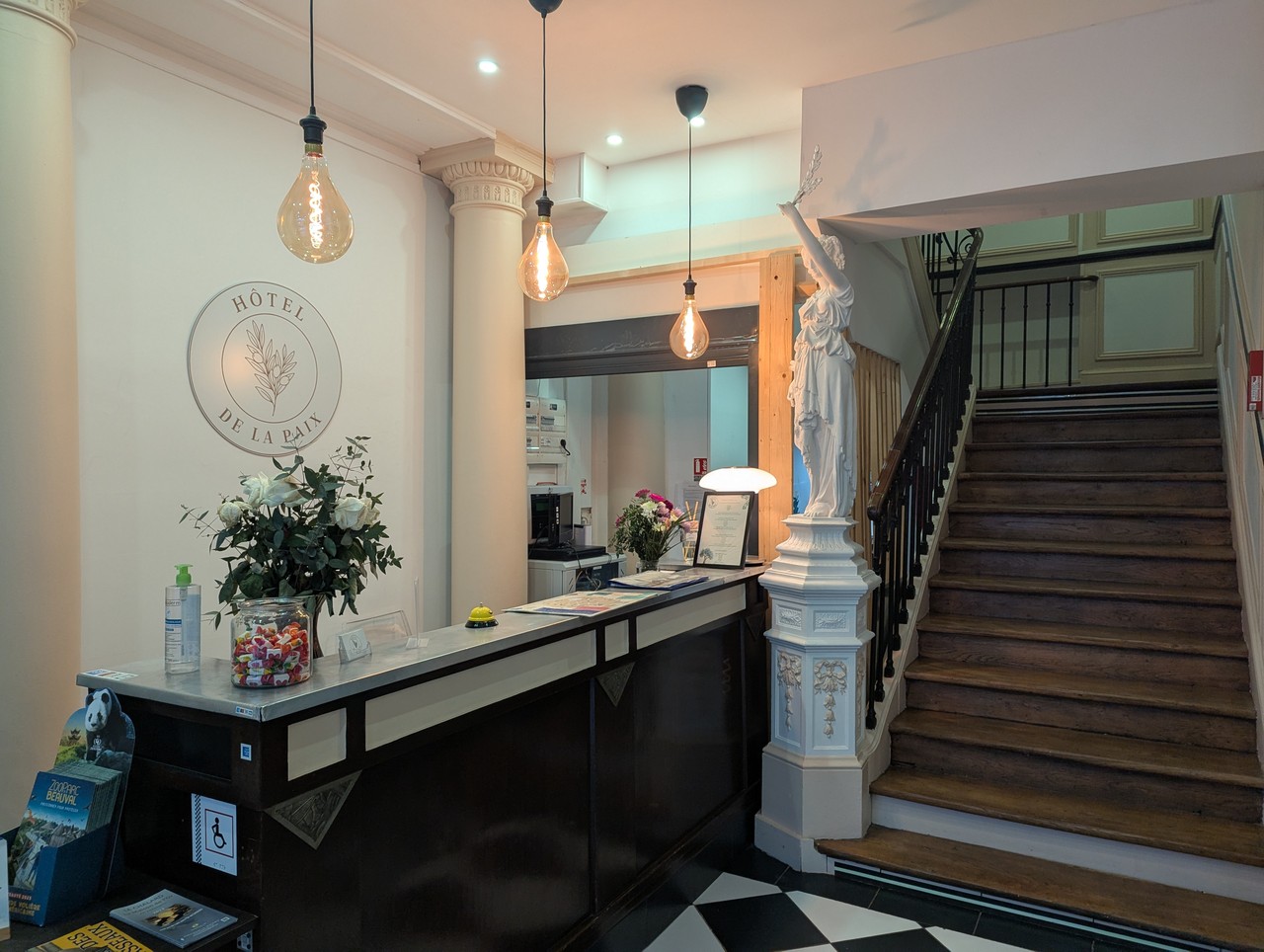
After several discussions, an act of surrender was drafted and approved on 21 August 1944. The signing ceremony was set for 8:30 PM at the Hôtel de la Paix, Gleiniger’s headquarters—a location of both strategic and symbolic importance, as it overlooked two war memorials: one for the 1870 war and another for World War I. A commemorative plaque on the Hôtel de la Paix’s façade, facing Boulevard de Fleurus, marks these events.
Upon hearing the news of the surrender, the SS regiment mutinied, and a German convoy of 1,150 men fled Limoges to the north. General Gleiniger, arrested for treason by the SS, was driven to suicide. Georges Guingouin and his men entered Limoges around 9:00 PM, heading first to the prison to free inmates before establishing his headquarters at the Hôtel Haviland.