#Museum
Paleis Het Loo during the Second World War
During the Second World War, Paleis Het Loo acquired a complex and heavy significance. For centuries it had served as the residence and emblem of the House of Orange, but under German occupation it was seized and repurposed by the Nazi authorities.
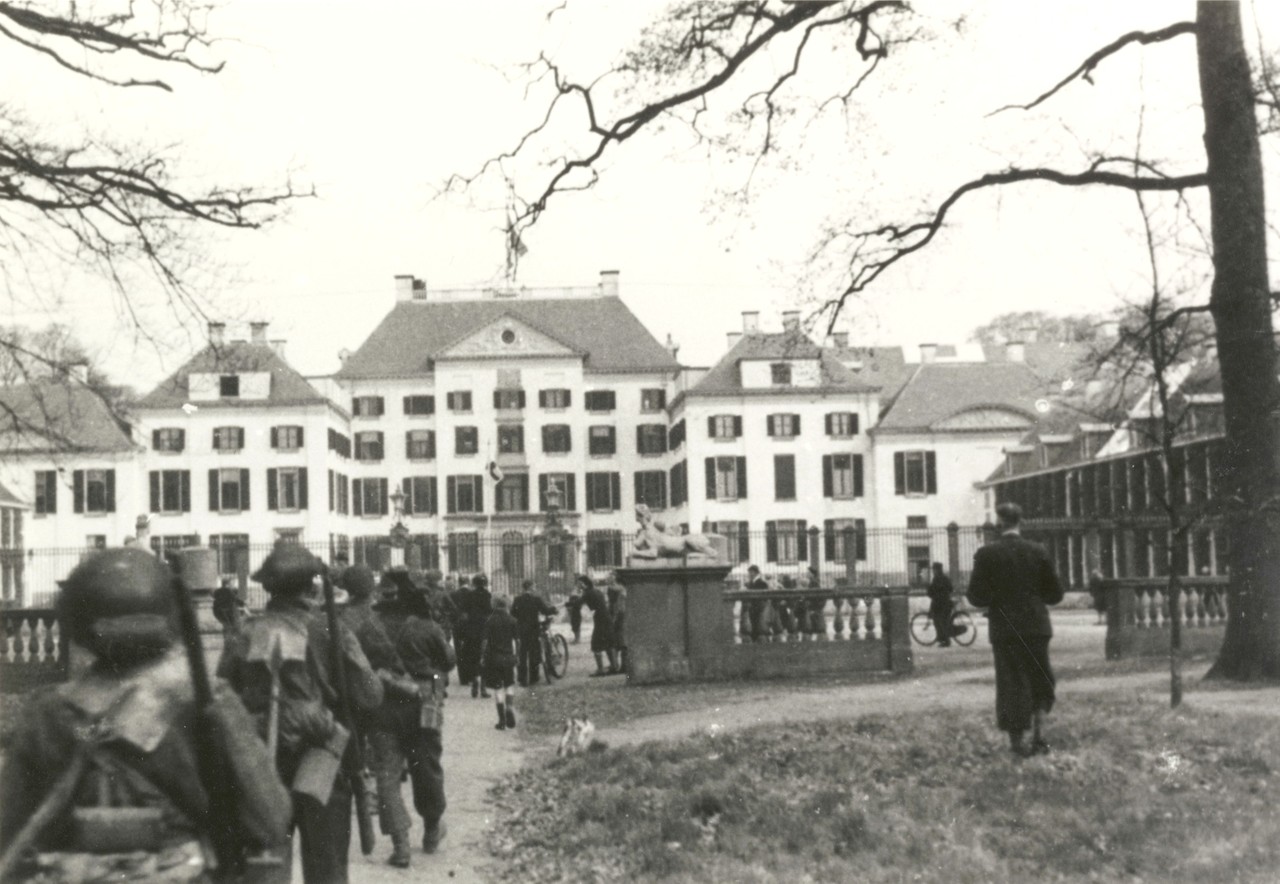
When German forces invaded the Netherlands in May 1940, Queen Wilhelmina fled to England, leaving Paleis Het Loo without its royal residents. It did not take long for the occupiers to take an interest in the palace. On 27 June 1940, SS officers Kurt Baron von Schröder and Karl Bockamp inspected the palace’s inventory. On 9 April 1941, the Wehrmacht moved into both side wings of the building. Only a few days later, the long avenue in front of the palace was renovated, and the northern section was replanted with young beech trees.
The extensive palace park was given a completely new role during the war. Owing to its position between the Veluwe and key transport routes, the Germans considered the estate strategically valuable. Guard posts, barriers and anti-aircraft positions appeared throughout the grounds; parts of the park were turned into training areas and storage sites. For the people of Apeldoorn, this meant that the familiar woodland landscape became a militarised zone, with restricted access and German patrols becoming part of everyday life.
At the same time, German institutions such as the Reichsforstverwaltung took over management of the estate. They implemented plans for timber harvesting, wildlife control and the restoration of avenues and water features. Although these measures were driven mainly by military and economic motives, they had the unexpected effect of keeping much of the landscape of Het Loo relatively intact throughout the war years. The impact of occupation was visible everywhere in Apeldoorn. In January 1943, the raid and deportation of the patients and staff of the Jewish psychiatric institution Het Apeldoornsche Bosch took place. German units marched along the roads near Het Loo on their way to the railway station, where the deportation trains departed. People from the surrounding area were also enlisted for labour on and around the palace grounds, sometimes voluntarily out of necessity, sometimes under compulsion—working on the construction and maintenance of German defensive structures.
From September 1944 onwards, the situation changed again. As the front drew closer and Canadian forces advanced, German troops began withdrawing through the woods surrounding Het Loo. The palace suffered damage through plundering and vandalism; several rooms were left empty or were used by soldiers. Nevertheless, major military engagements around the palace did not occur. On 17 April 1945, Canadian troops liberated Apeldoorn without significant fighting. The Germans withdrew in an orderly fashion, leaving Paleis Het Loo in a neglected and deteriorated state. Two days later, Prince Bernhard established his military staff headquarters at the palace, which became the command centre of the Dutch armed forces. It was not until the autumn of 1945 that restoration could begin. The Second World War left visible and lasting marks on Paleis Het Loo.