#Biography - France
Eugene Bullard
Eugene Bullard was an American-born veteran who served France in both world wars and returned to combat in 1940 during the German invasion.
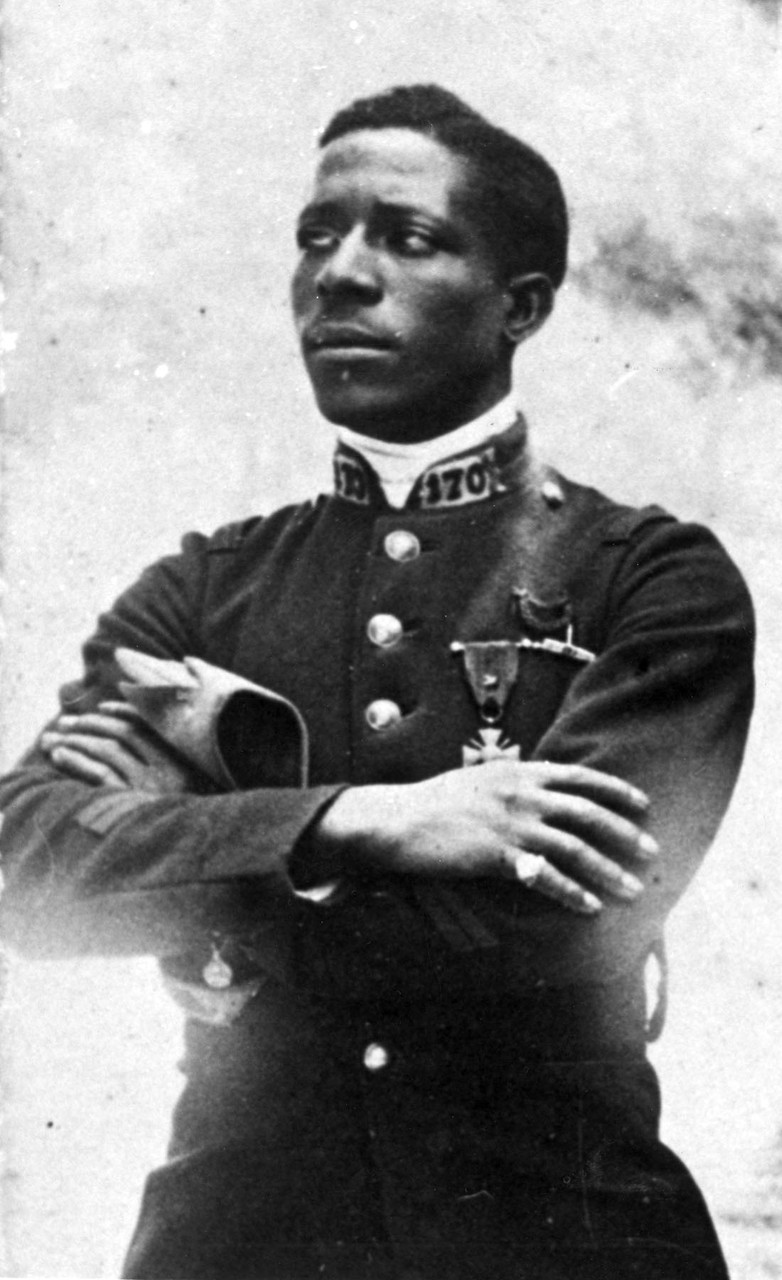
Eugene Jacques Bullard was born on 9 October 1895 in Columbus, Georgia, United States. The son of William Bullard, a former enslaved man, and Josephine Bullard, he grew up in the segregated American South. After leaving home as a child, he eventually travelled to Europe and settled in France before the First World War.
Bullard first served France during the First World War. He enlisted in the French Foreign Legion in 1914, fought at Verdun, and was seriously wounded in 1916. After his recovery, he joined the French flying service and became one of the first African-American military pilots. After the war, he remained in Paris, where he worked in nightlife and became part of the city’s artistic circles.
His Second World War story began before the German invasion of France. In the late 1930s, Bullard was involved in intelligence work against pro-Nazi activity in Paris. Because he spoke German and was known in the city’s nightlife, he was able to listen to conversations among German visitors and sympathisers. This work connected him to French efforts to monitor threats before the outbreak of war.
When Germany invaded France in 1940, Bullard again volunteered to serve. Although he was already in his forties, he joined the French Army and served as a machine gunner in the 51st Infantry Regiment. During the fighting, he was severely wounded by an artillery shell. As France collapsed, Bullard escaped the advancing German forces and made his way south.
To avoid capture, he crossed into Spain and then Portugal before returning to the United States. He settled in New York, where he lived for the rest of his life. Despite his military service to France, he returned to a country where racial segregation and discrimination still shaped daily life.
After the war, Bullard received several French honours, including the Légion d’honneur. He died in New York on 12 October 1961. In 1994, he was posthumously commissioned as a second lieutenant in the United States Air Force.