#Biography - Italy
Ferruccio Parri
Ferruccio Parri, a liberal anti-fascist, helped lead Italy’s Resistance, survived imprisonment, and became the first post-liberation Prime Minister. He remained a key figure in rebuilding Italian democracy and opposing neo-fascism.
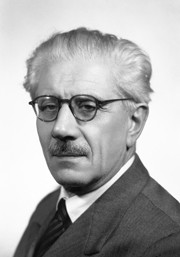
Ferruccio Parri was an Italian liberal-democratic anti-fascist, journalist, professor, and politician who played a crucial role in Italy’s Resistance and post-war reconstruction.
Born in Pinerolo in1890, he graduated in 1913 with a degree in economics. During World War I, he served as an infantry officer on the Carso and Piave fronts, where he was wounded several times and honored for bravery. In 1917, serious injuries forced him to leave the front.
After the war, Parri settled in Milan, working as a journalist and later teaching literature. He was deeply opposed to the rise of fascism and supported clandestine publications. In 1926, he was
arrested alongside Carlo Rosselli and others for anti-fascist activities and imprisoned in Savona, then transferred to Ustica and Lipari. Arrested again in 1930 for his alleged connection to the anti-fascist "Giellist" network, he was sentenced to five years of internal exile.
Returning to Milan in 1933, he resumed his economic studies and collaborated with research institutions. During World War II, Parri became one of the leading figures of the Italian Resistance. He played a vital role in linking underground partisan groups in northern Italy and co-founded the Action Party in 1942. As a coordinator of the partisan struggle, he helped organize armed resistance against the Nazi and fascist forces.
Captured by the Gestapo in 1944, Parri was imprisoned but released in March 1945 after Allied intervention. Following the liberation, he returned to Milan and was invited to lead the first government of free Italy in April 1945. However, political instability led to his resignation in November.
Parri later joined the Italian Republican Party and was elected to the Constituent Assembly in 1946. He remained active in public life, serving as president of the Italian Federation of Partisan Associations and continuing his work in historical research. A fierce opponent of neo-fascism, he advocated for the dissolution of the Italian Social Movement (MSI) in 1960.