#Landmark
Tank ditch in Reuver
A tank ditch or anti-tank ditch is a deep and wide trench dug into the earth with steep sides that tanks or other military vehicles cannot cross without aids.
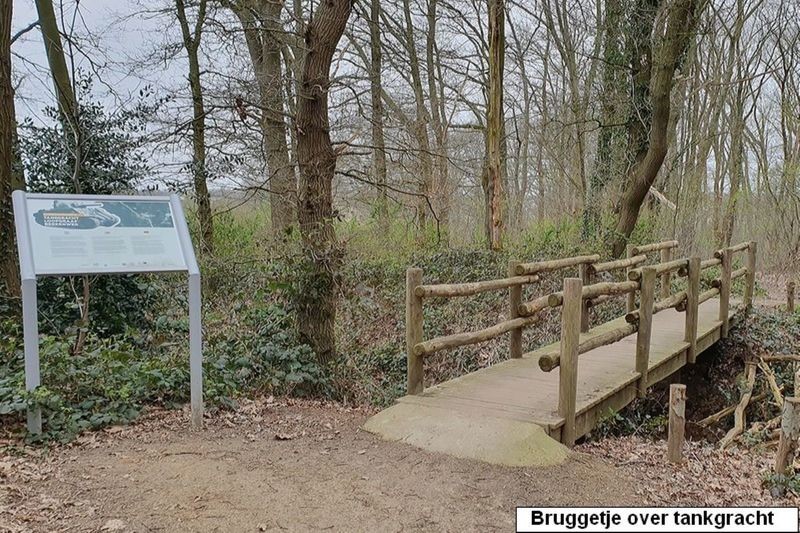
A tank ditch or anti-tank ditch is a deep and wide trench dug into the earth with steep sides that tanks or other military vehicles cannot cross without aids. A trench is a trench dug into the earth through which soldiers can move and are protected against enemy fire.
The tank ditch and trench in Reuver are part of the first-line defense intended to delay an Allied crossing of the Meuse. This delay allowed the second and third lines at the foot of the high terrace to be put into a state of defense in time.
The first-line defense consisted mainly of trenches and a tank ditch. In addition, there were observation posts everywhere that mapped the movement of the Allies on the other side of the Meuse.
Parallel to the dirt road, which at this location leads towards the floodplains of the Meuse, lay a communication trench in the open field that ended in a trench constructed perpendicular to it (a kind of T-junction). Three forward positions, equipped with a machine gun, were located here. These positions were aimed at the Meuse and the west bank, which was in the hands of the Allies. Where we are standing now, the connecting trench connected to the kilometers-long trench that followed the bank of the Meuse from north to south.
A section of the trench and anti-tank ditch has been reconstructed. This reconstruction shows what trenches and anti-tank ditches looked like during the Second World War.