#Landmark
The Villa Tivoli: The "brown house" or the "wolf trap"
Feared by all, Villa Tivoli became the headquarters of the German police in Limoges starting in 1943. It served as a torture site from which few Resistance fighters emerged alive.
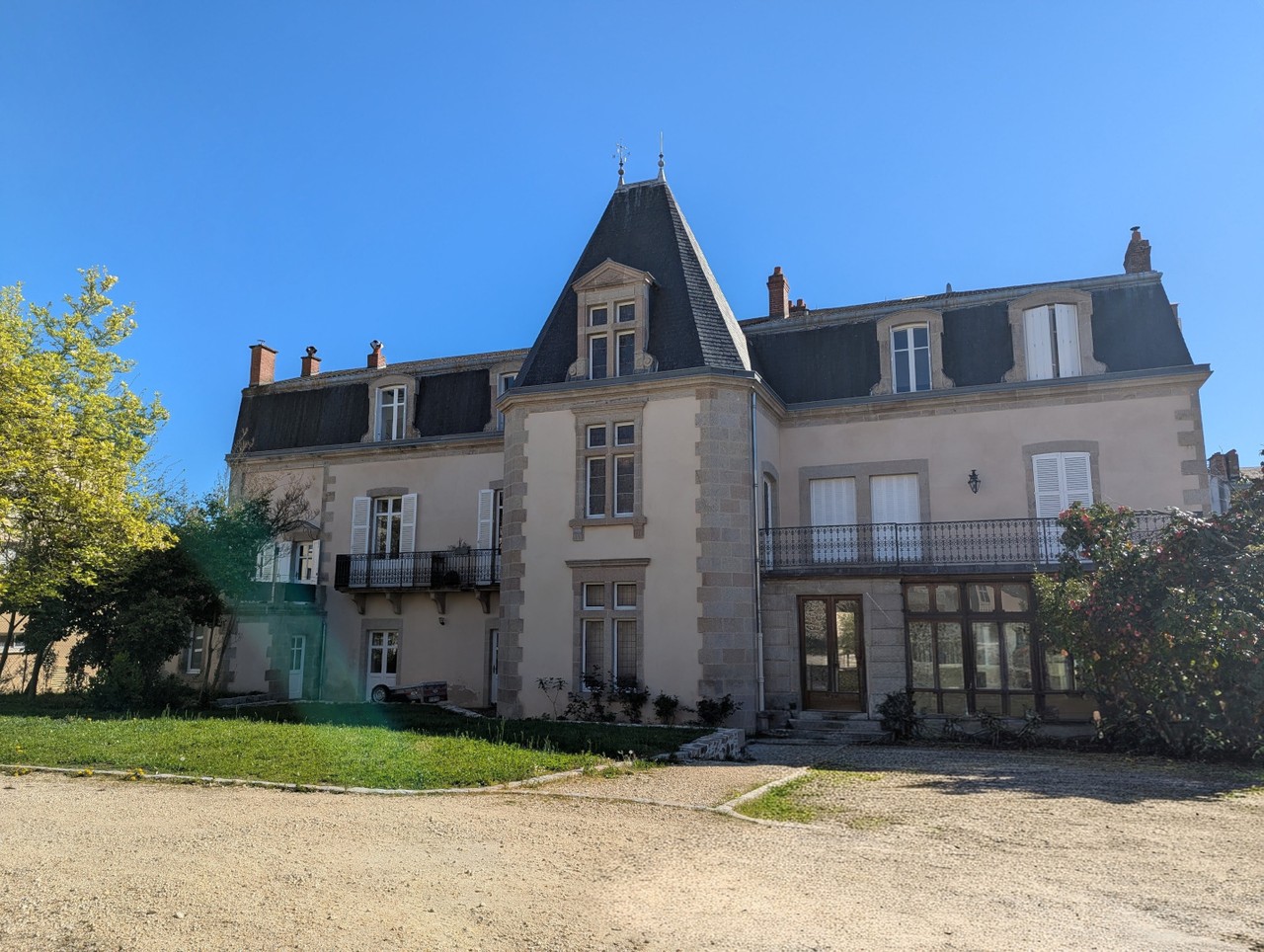
In early 1943, the KdS (Commander of the German Security Police and Intelligence Agency), commonly known as the Gestapo, took over a property belonging to the Lacaux industrial family at the corner of Cours Gay-Lussac and Impasse Tivoli. The location was no accident: tucked away in a dead-end alley, the buildings were hidden behind high walls. The nearby Feldgendarmerie (German military police) stationed at the Marceau barracks and the train station made it easy to transfer prisoners.
The building at the entrance to the alley was nicknamed the "Brown House" or the "Wolf Trap" by those unfortunate enough to enter and lucky enough to leave alive to tell the tale. The cellars served as detention and torture chambers. The building was demolished in the 1970s and replaced by a modern structure. Further down the alley to the right, a large bourgeois house accommodated some high-ranking officers. Behind it, the garages were also used for torture.
The office was initially led by Hans Nikolai Jessen, then by August Meier in June 1943. A police officer since 1923, a Nazi Party member since 1933, and part of the SS since 1934, Meier had previously operated in Czechoslovakia, Ukraine, and the Caucasus, where his unit was involved in numerous atrocities.
Between November 1942 and August 1944, the Nazi police in Limoges and their local collaborators arrested at least 920 political or racial enemies of the occupier. Nearly all of those arrested suffered violence or torture. Those who survived were sent to Romainville, Parisian prisons, or the Compiègne camp before being deported to concentration camps, like Violette Szabo. A British secret agent with the Special Operations Executive (SOE), she was captured on 10 June 1944 near Salon-la-Tour in an ambush set by a German patrol. She was tortured at Villa Tivoli, then deported to Ravensbrück concentration camp north of Berlin, where she died on 5 February 1945.
After the war, the street was renamed. Today, it is known as Impasse Saint-Exupéry.